Click any image to view it in full size.
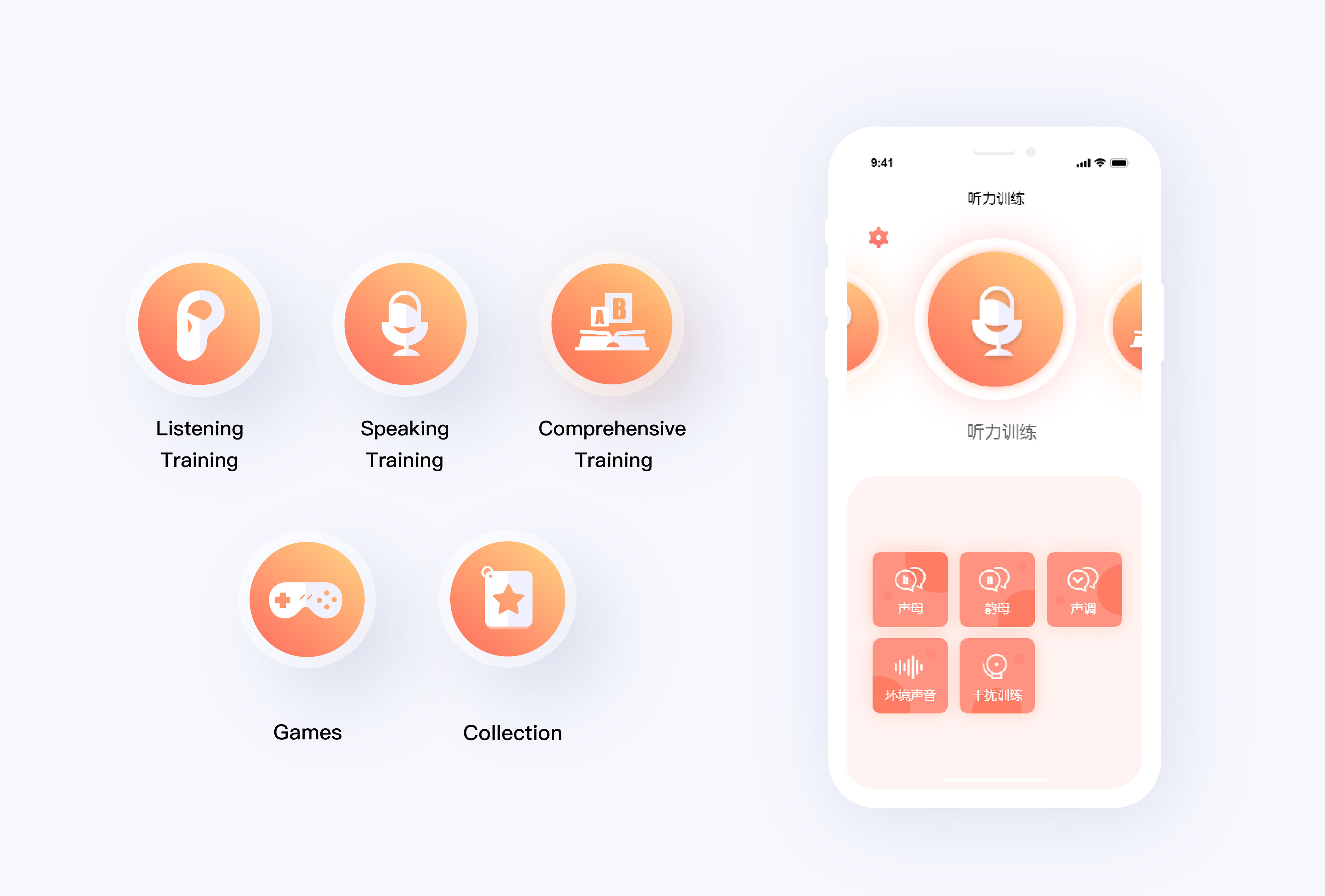
Listening and Speaking training APP for hearing-loss people.
Click any image to view it in full size.
There are 3.6 billion hearing-loss people around the world, nearly 90 million in China. How might we help them do listening and speaking rehabilitation through a mobile App?
“I am a hearing-loss person with a cochlear implant. Now I need to practice listening and speaking skills... Most Mandarin learning apps assume that users can understand Mandarin directly and easily, also the hearing-loss are not their target users.”
— From a hearing-loss user
Hearing loss people are easily getting into trouble in their lives because of the adverse effects of hearing on them. So they can’t get into mainstream society very well. In fact, people with hearing impairment have the same vocal organs as normal people. Therefore, as long as they get suitable training, the hearing-loss people can possibly speak in the future.

Understanding the market, existing solutions, and most importantly, the actual needs and pain points of our target users.
I began by reading a lot of thesis about characteristics, language recognition, and rehabilitation of hearing loss. Through this research I discovered some initial insights that guided us moving forward:
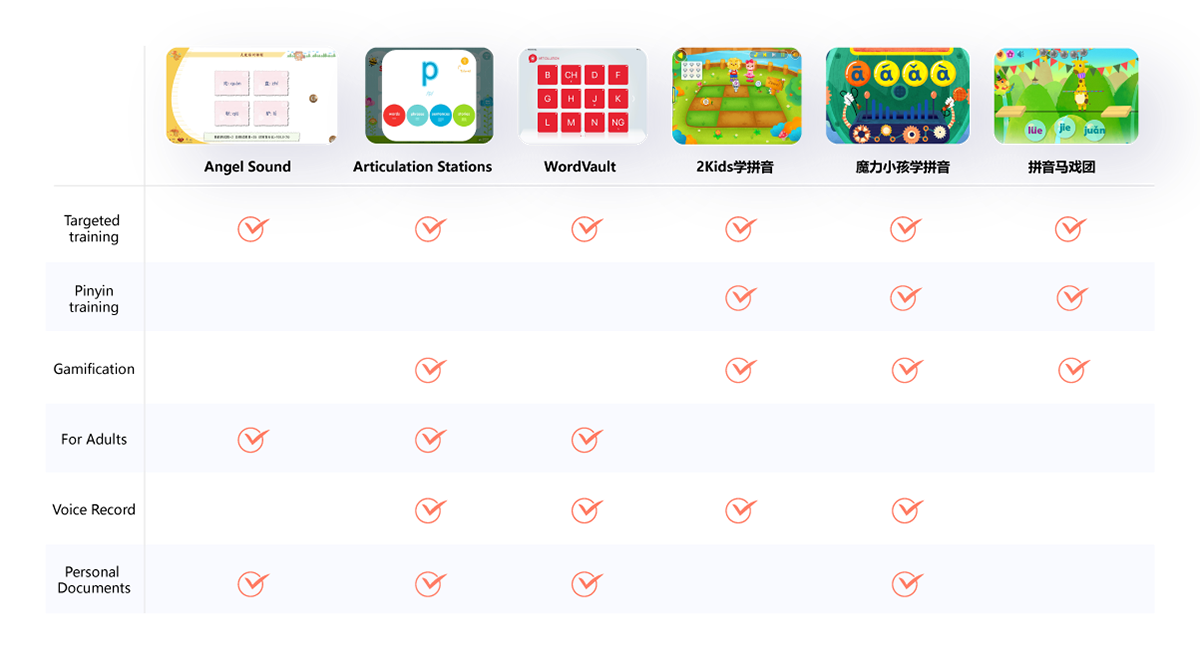
Most of the current foreign apps are developed by speech therapy companies, and many applications are designed for speech-language therapists... There are no apps for both hearing and speech rehabilitation in the domestic market.
I also learned some devices for speech rehabilitation, such as Changzhou Qianxi, Shanghai Taiyige, and COGNI. Those devices are expensive and mostly designed for schools, hospitals, and language rehabilitation institutions. Many features can be fully applied in mobile apps instead.
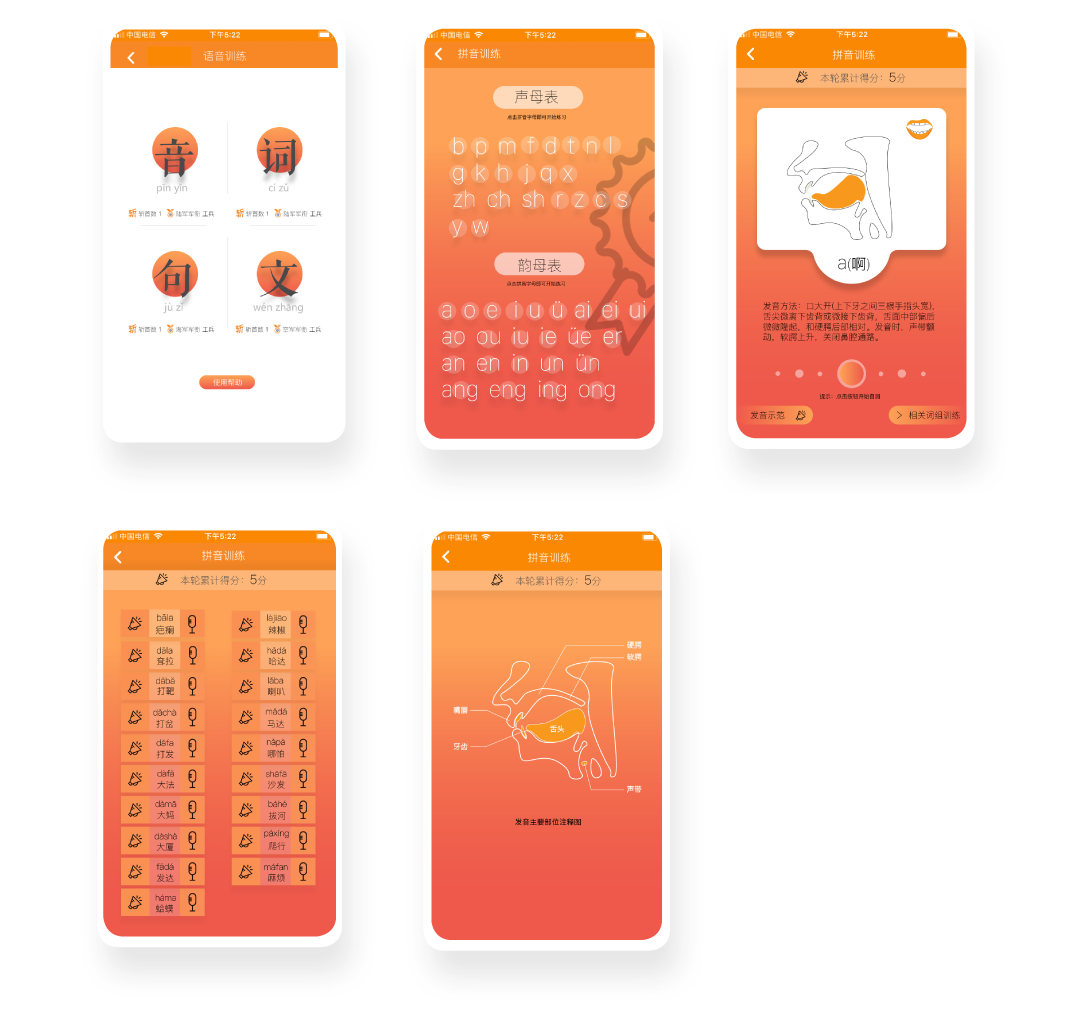
Reviewing previous pinyin training I did at Voibook company to understand what can be improved.
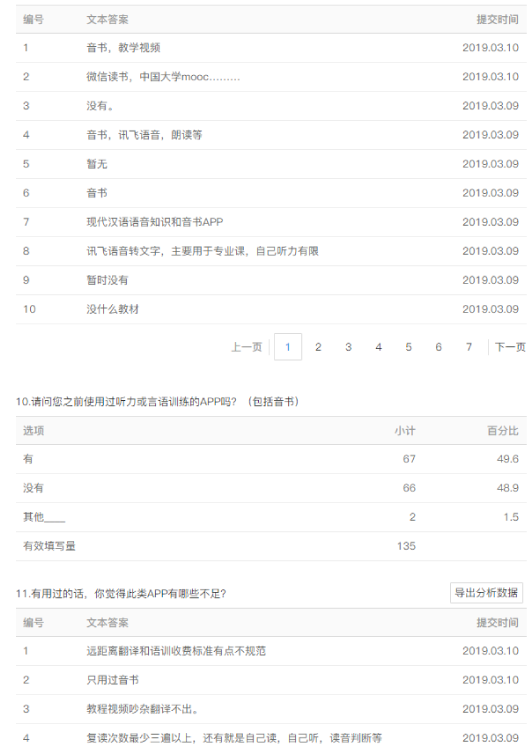
To understand our targeted users, requirements, and solutions, I collected 135 survey results.
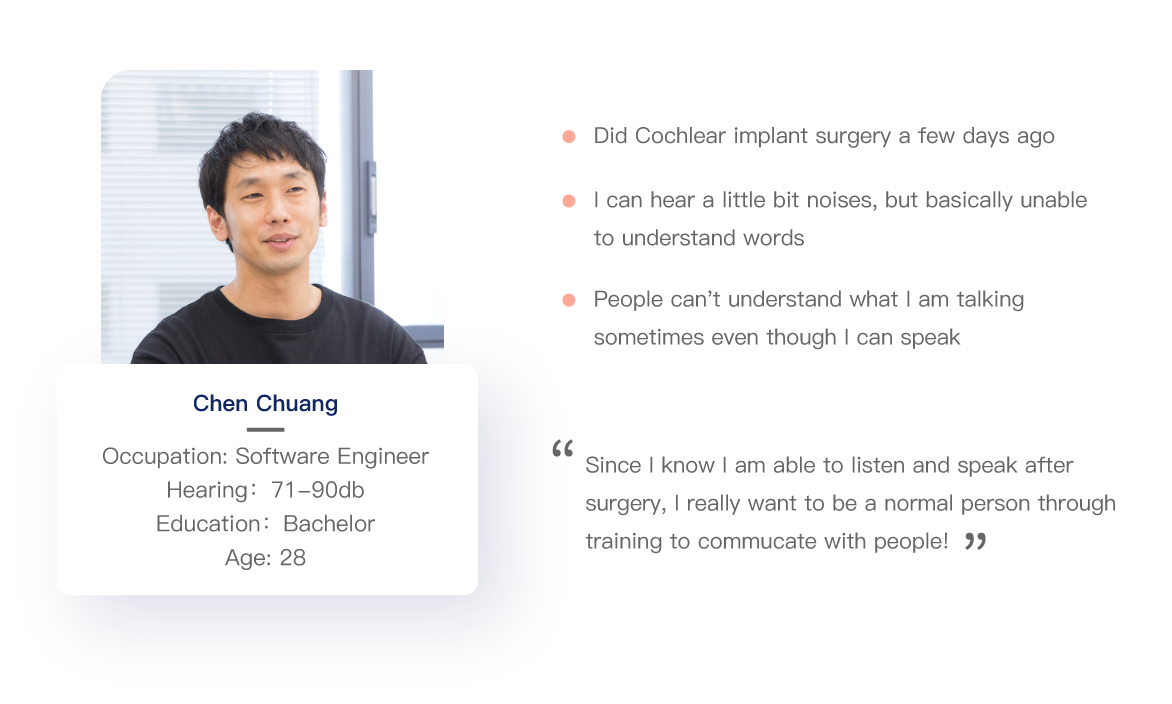
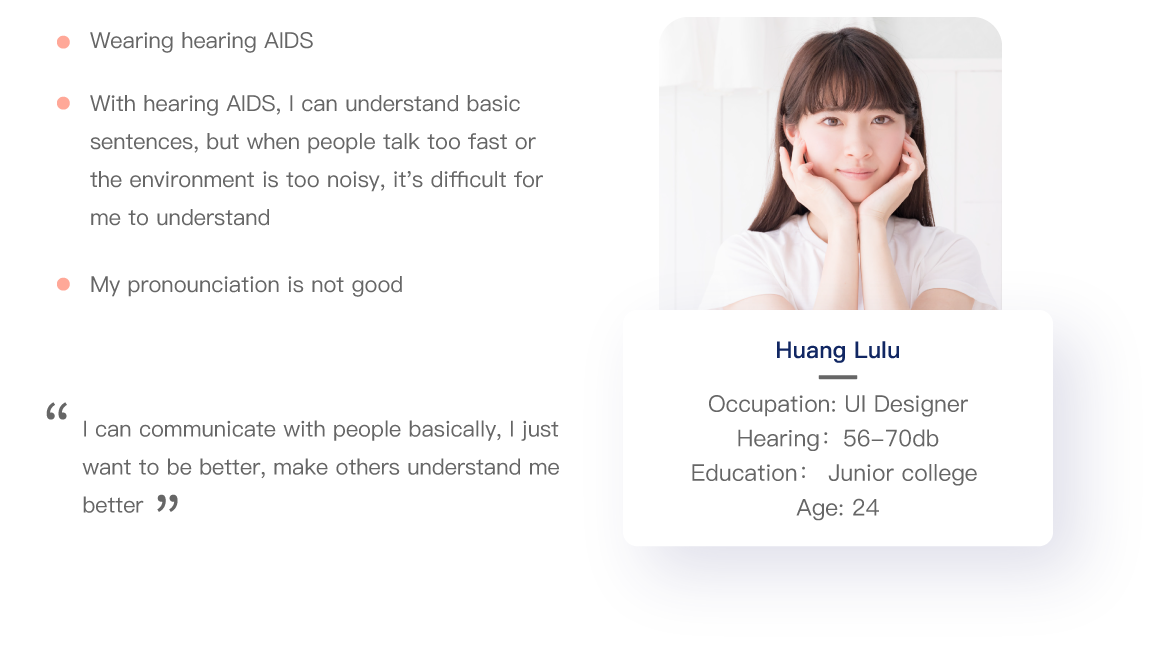
I conducted interviews with 5 hearing-loss people and concluded several core pain points.

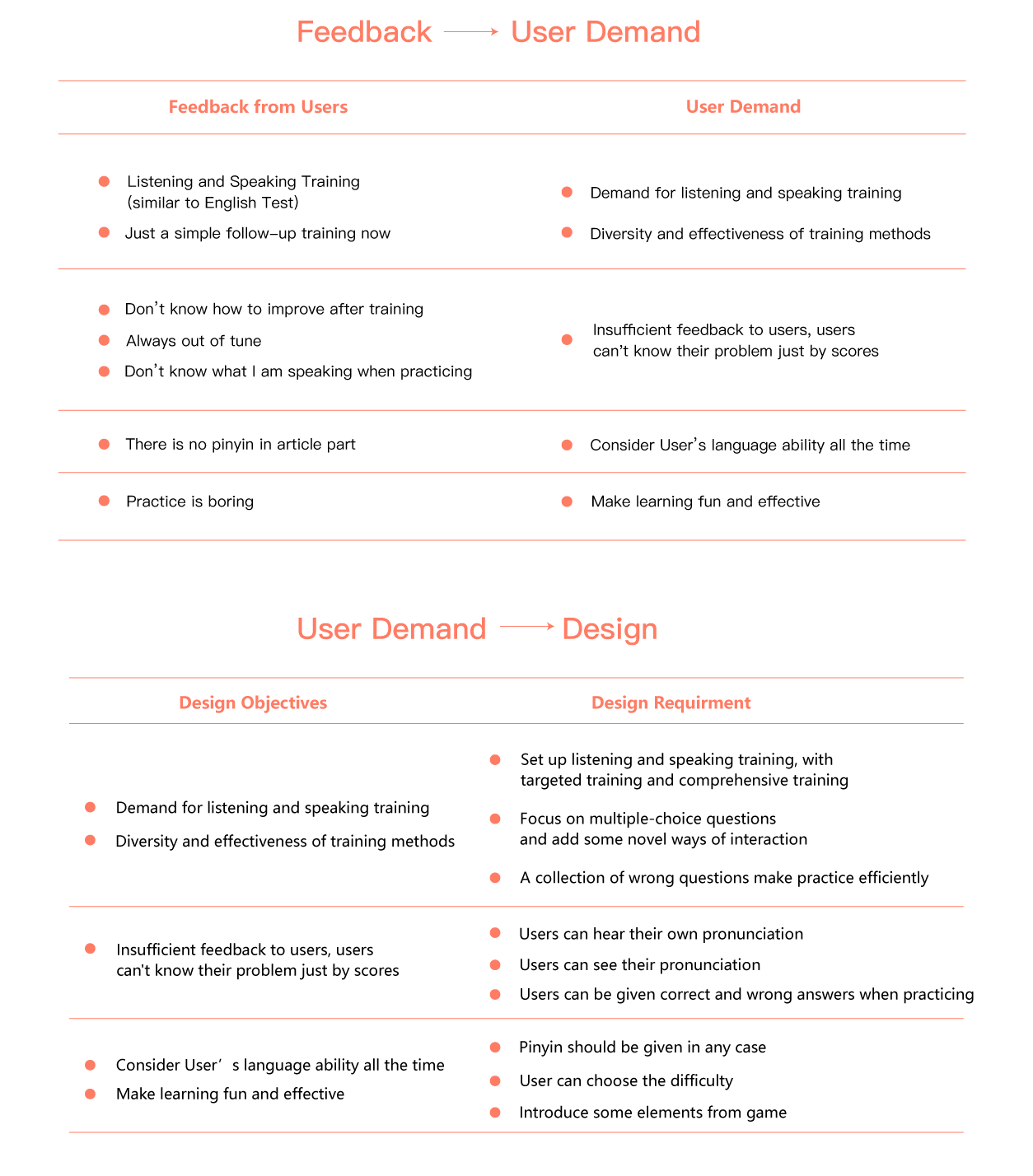
With the goal of sparking ideas to overcome difficulties, we transitioned into generative research to define the core solutions and system structure.
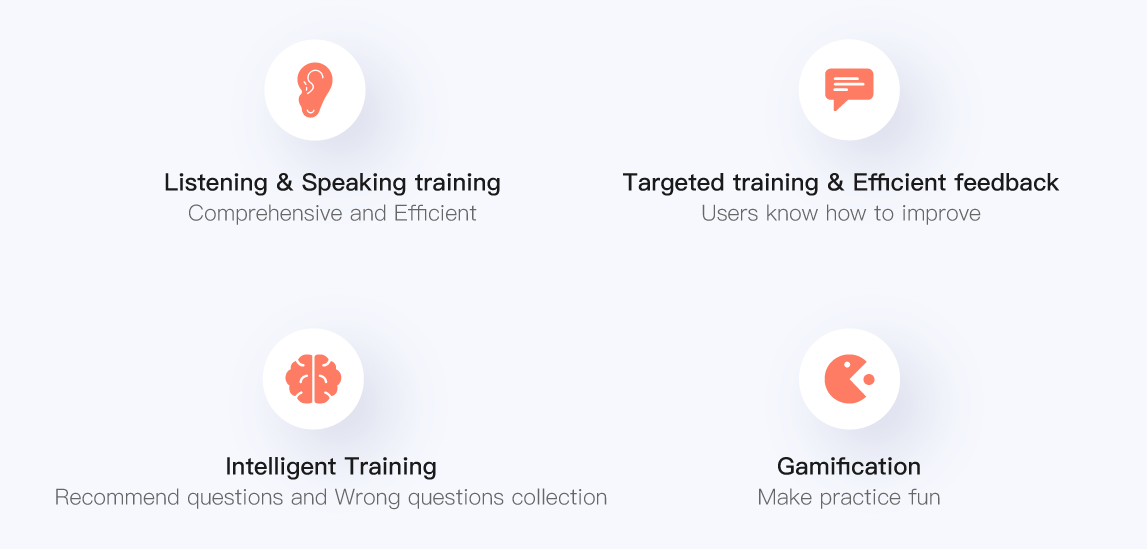
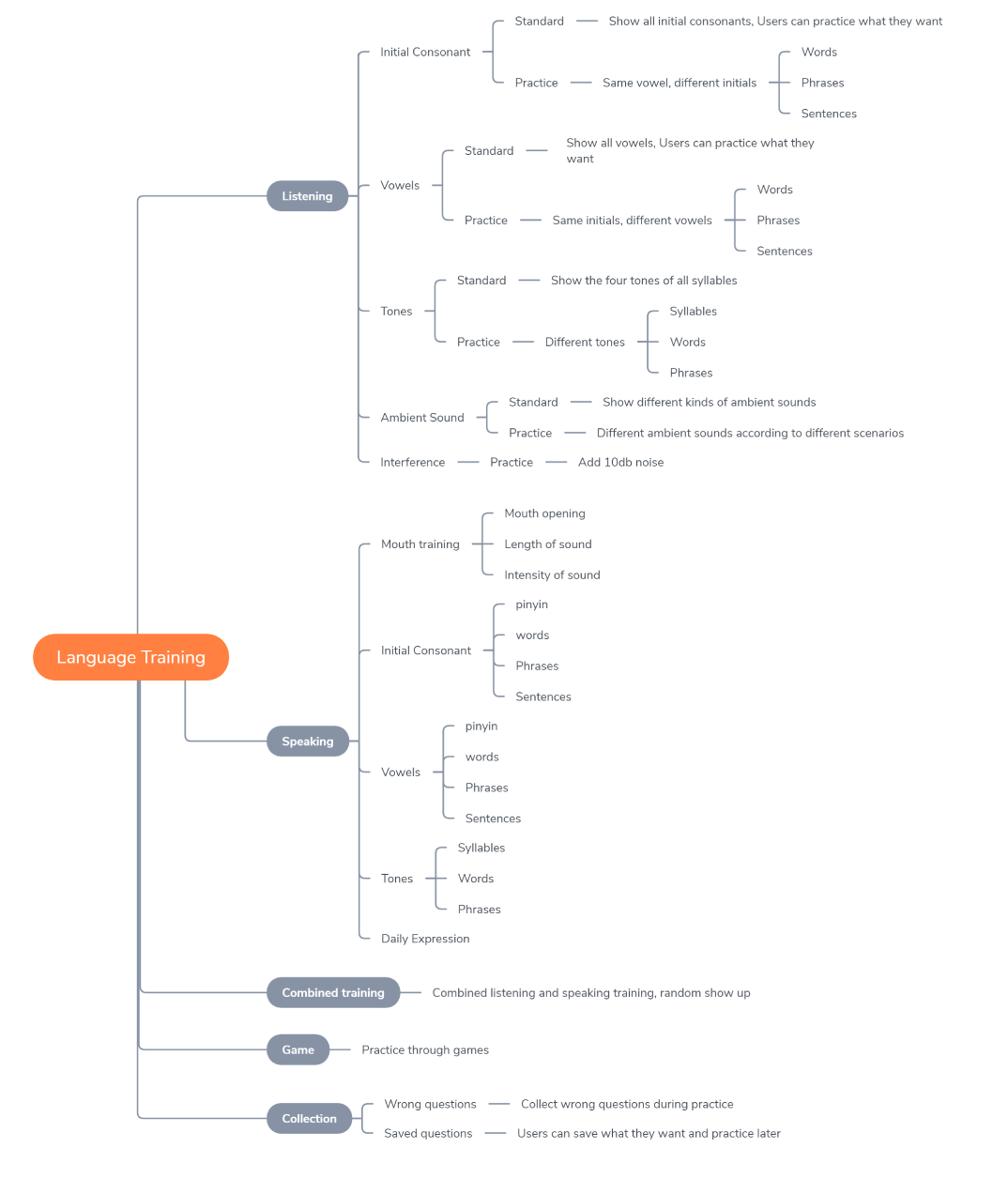
Developing iterations of key features, gathering feedback from expert and development teams, and refining the wireframes.
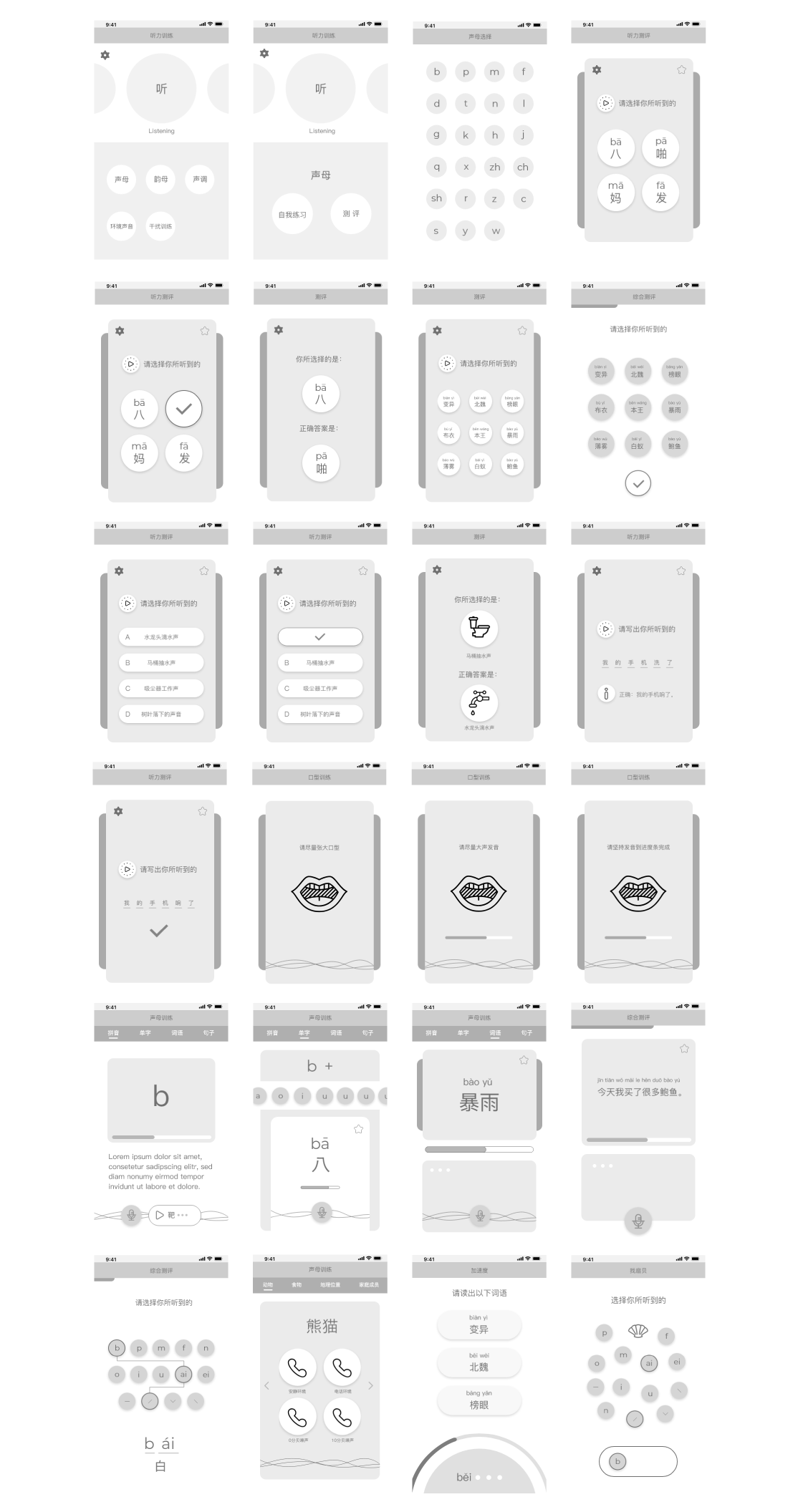
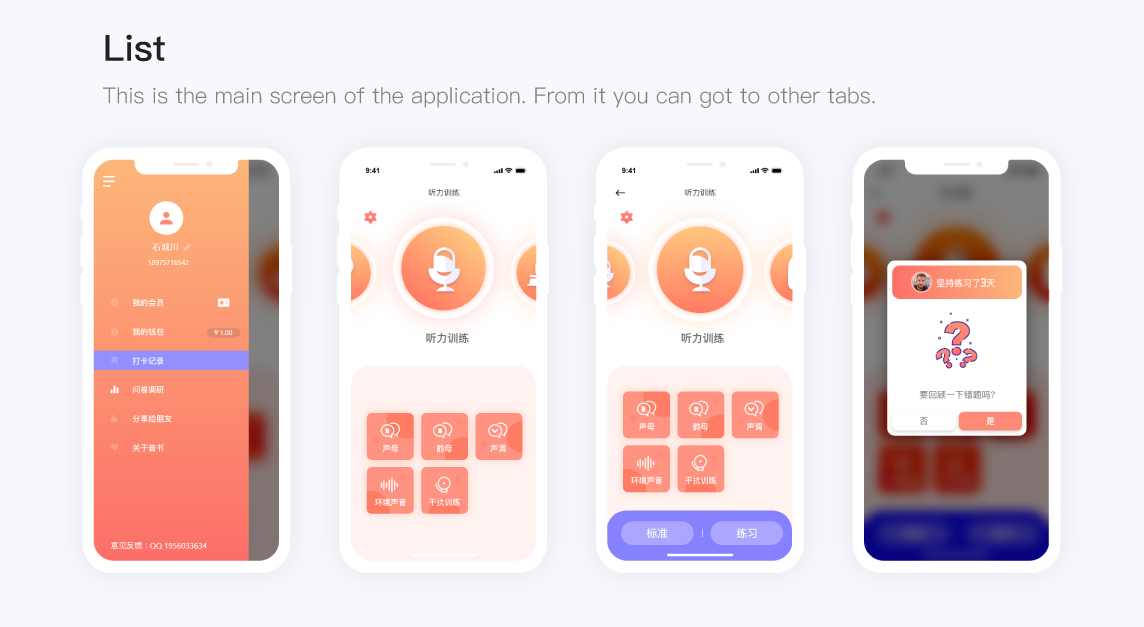
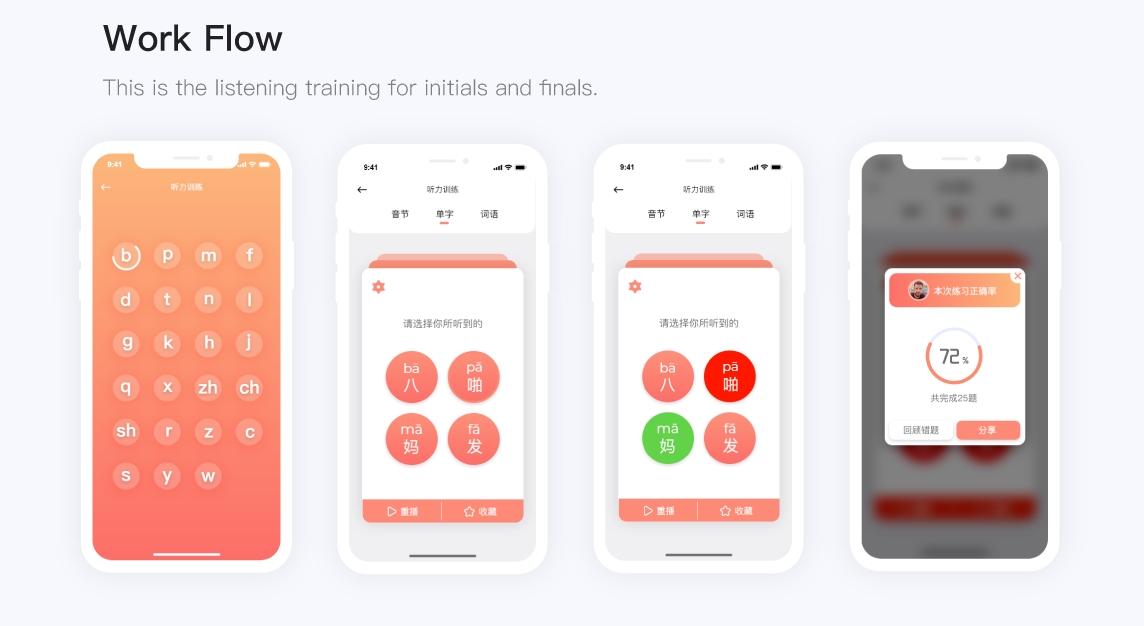
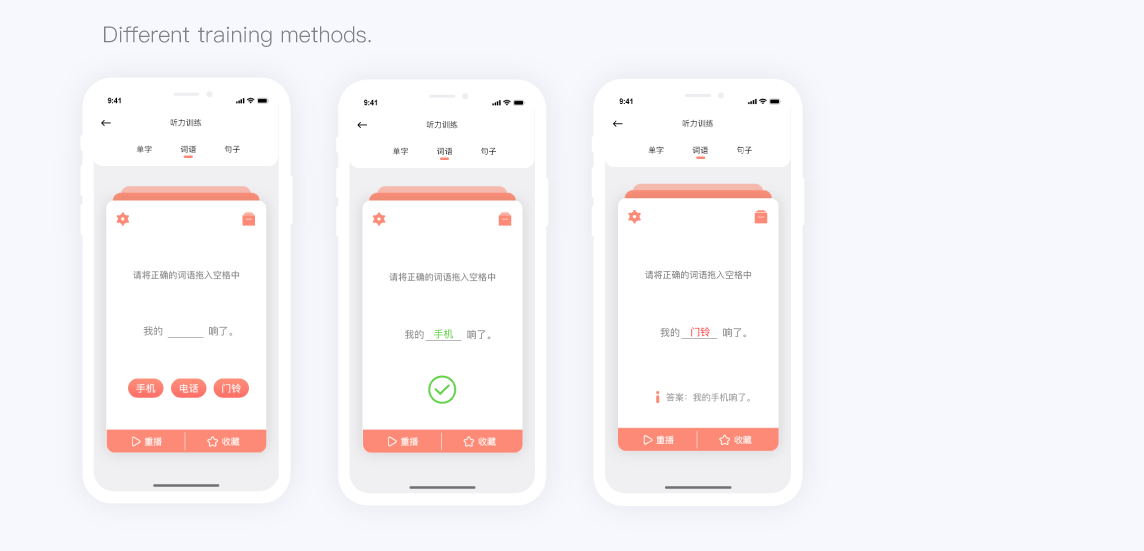
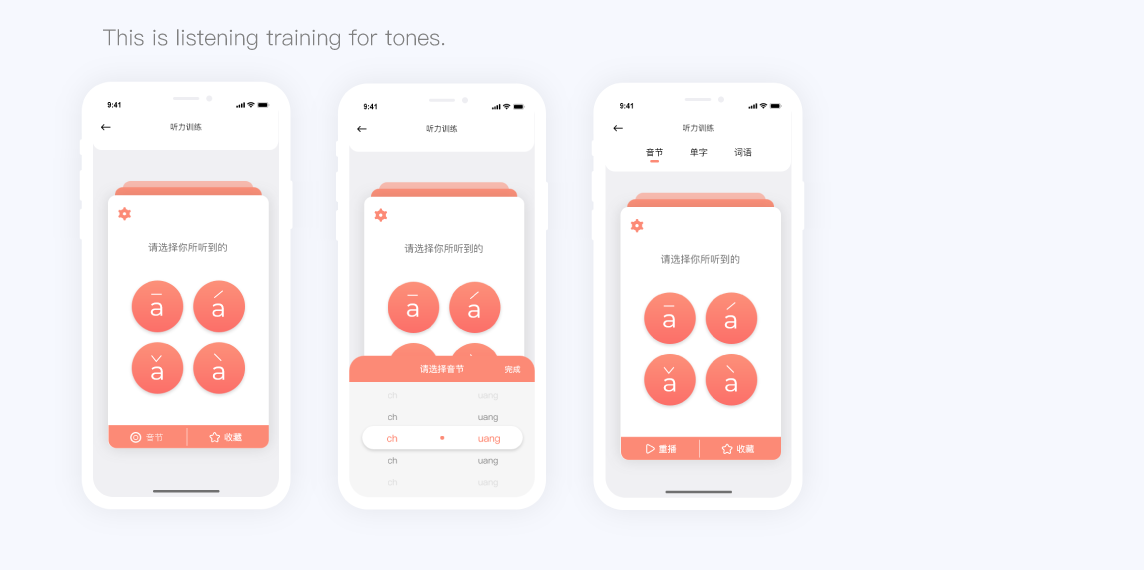
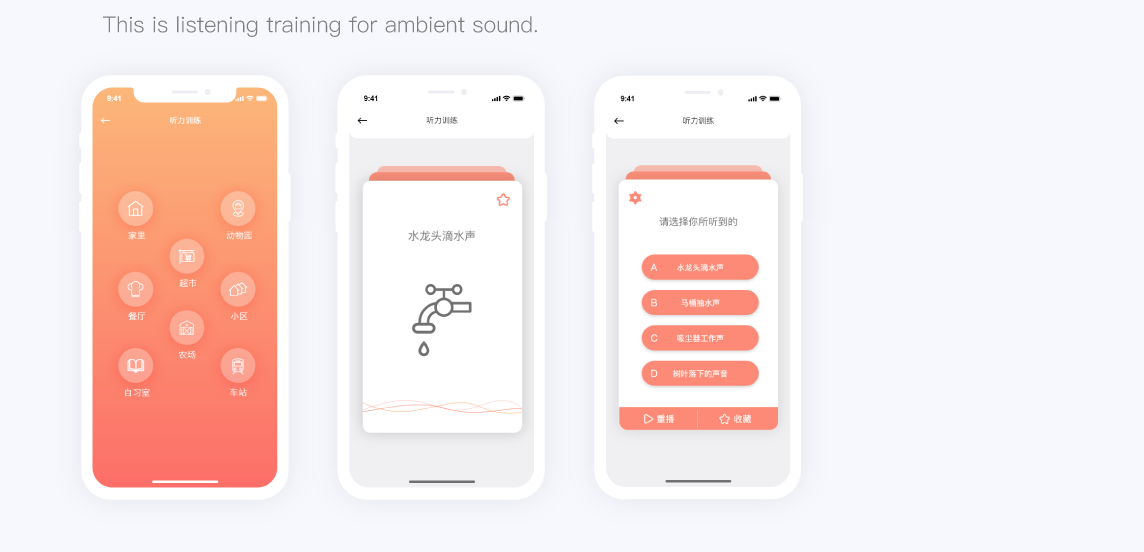
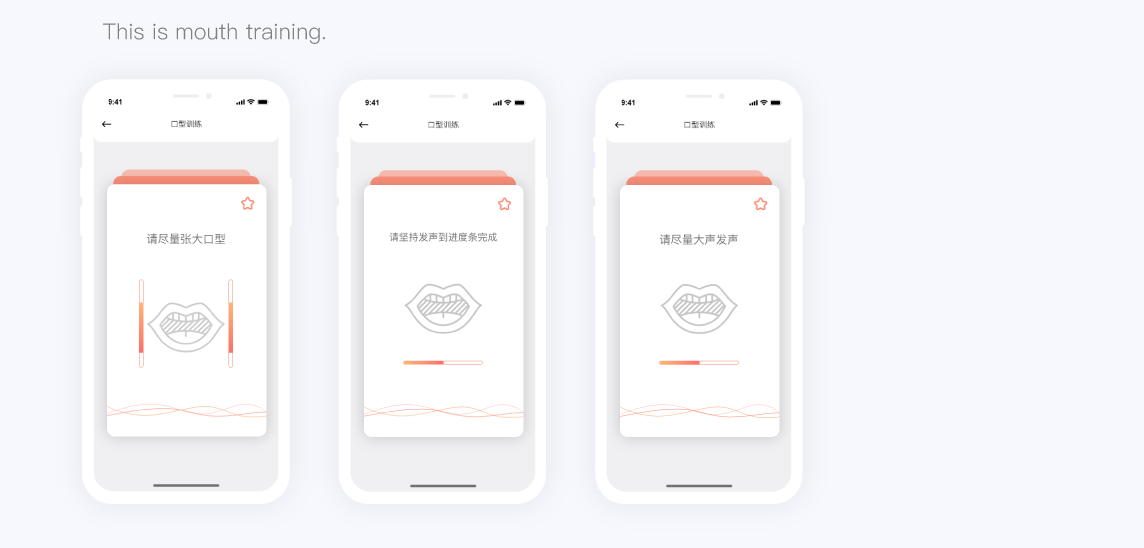
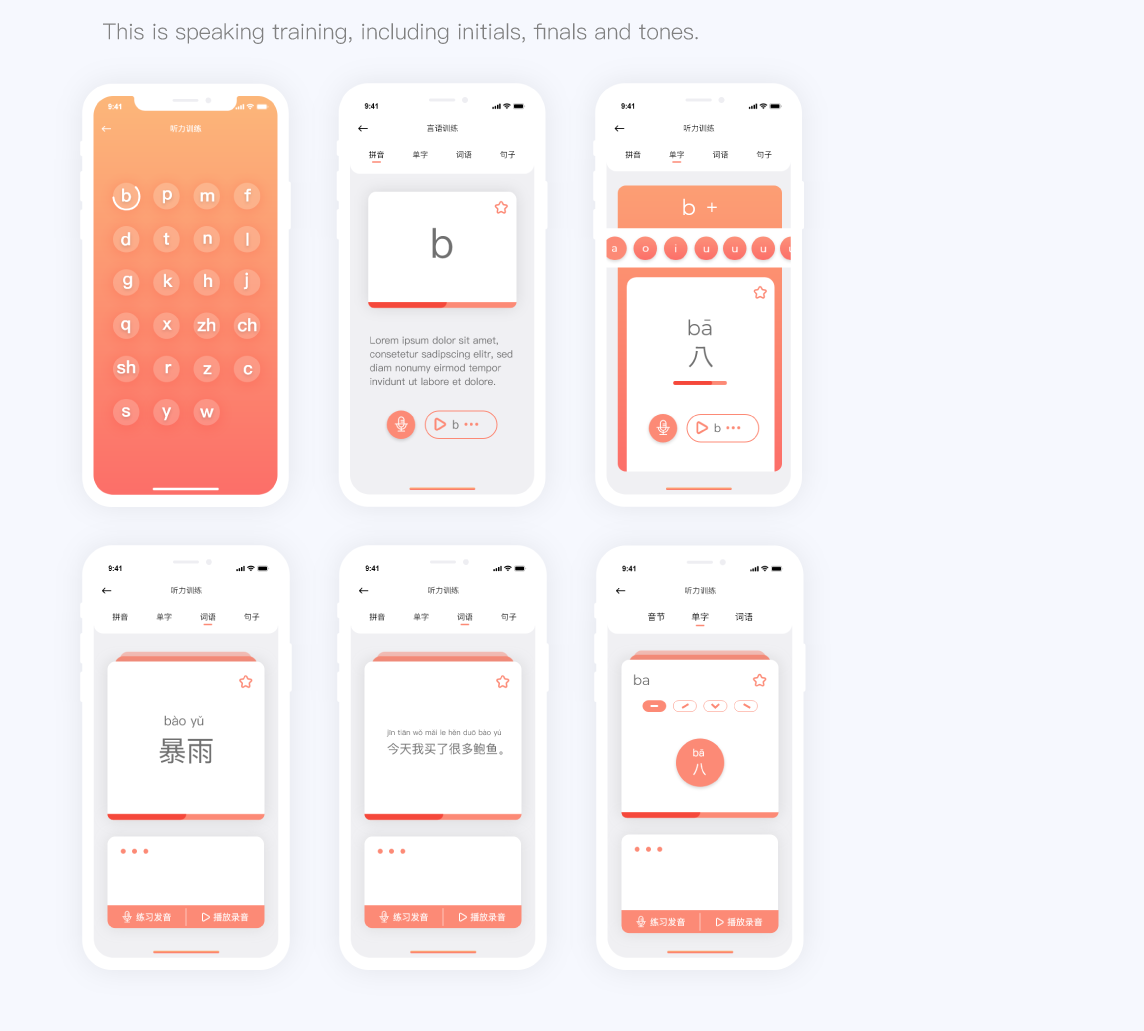
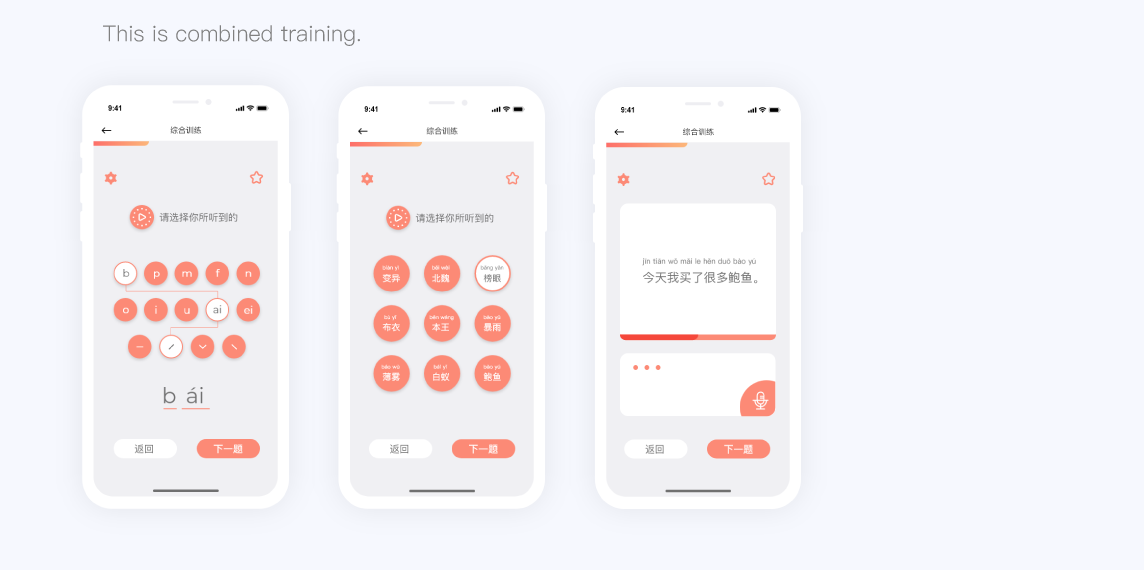
The result of all this research and iteration is the Voibook training App, helping hearing-loss people to do basic language rehabilitation and live a normal life.